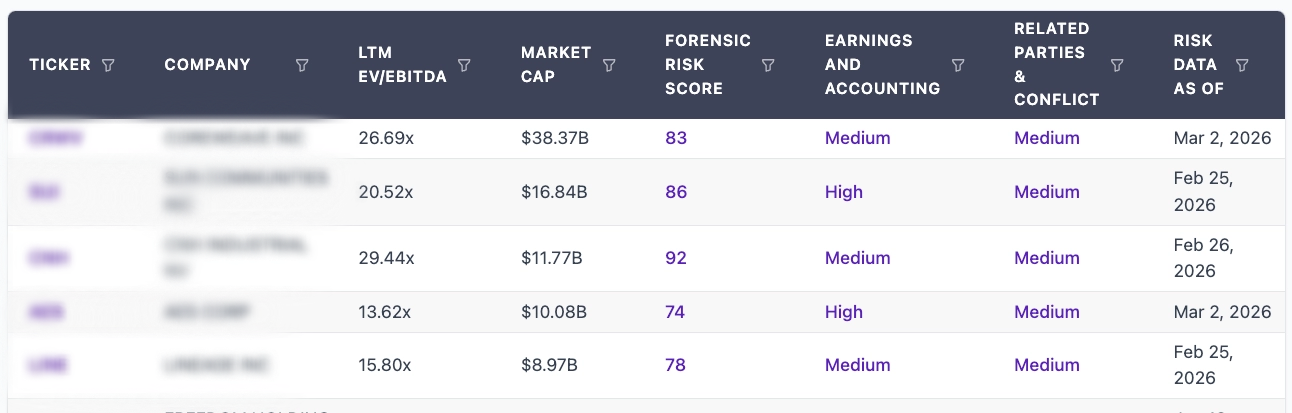
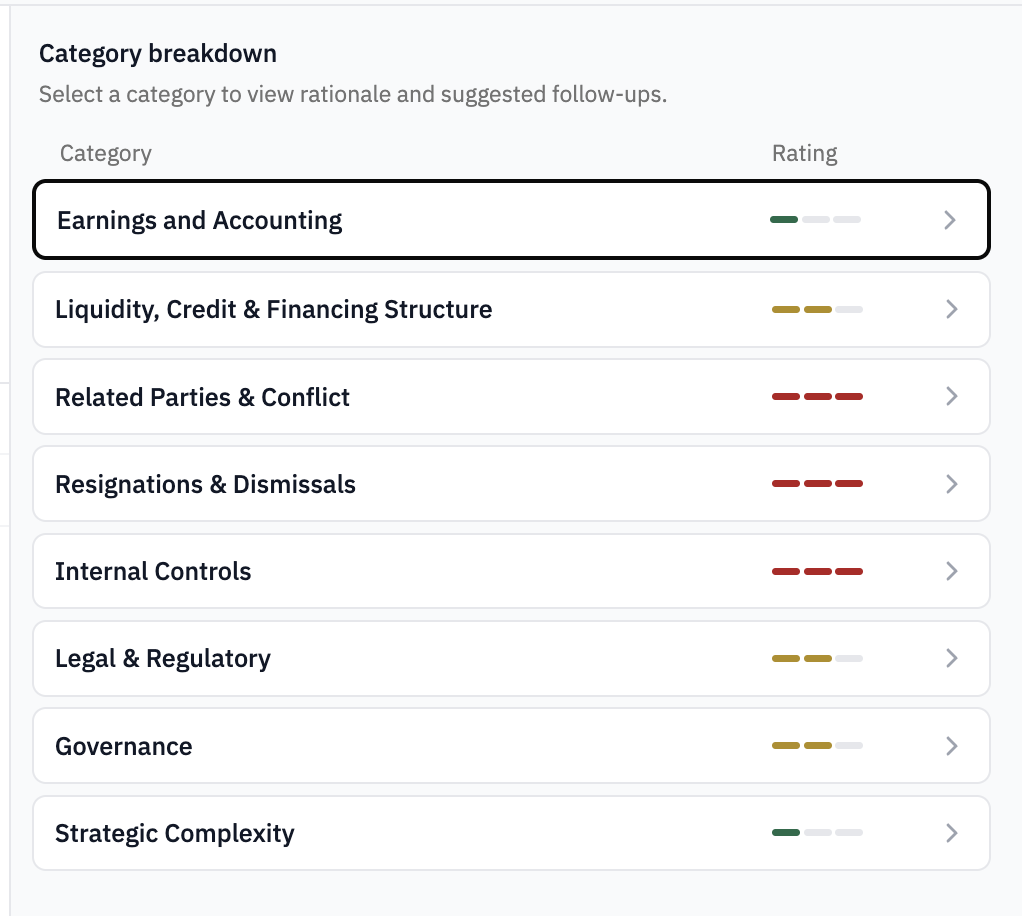
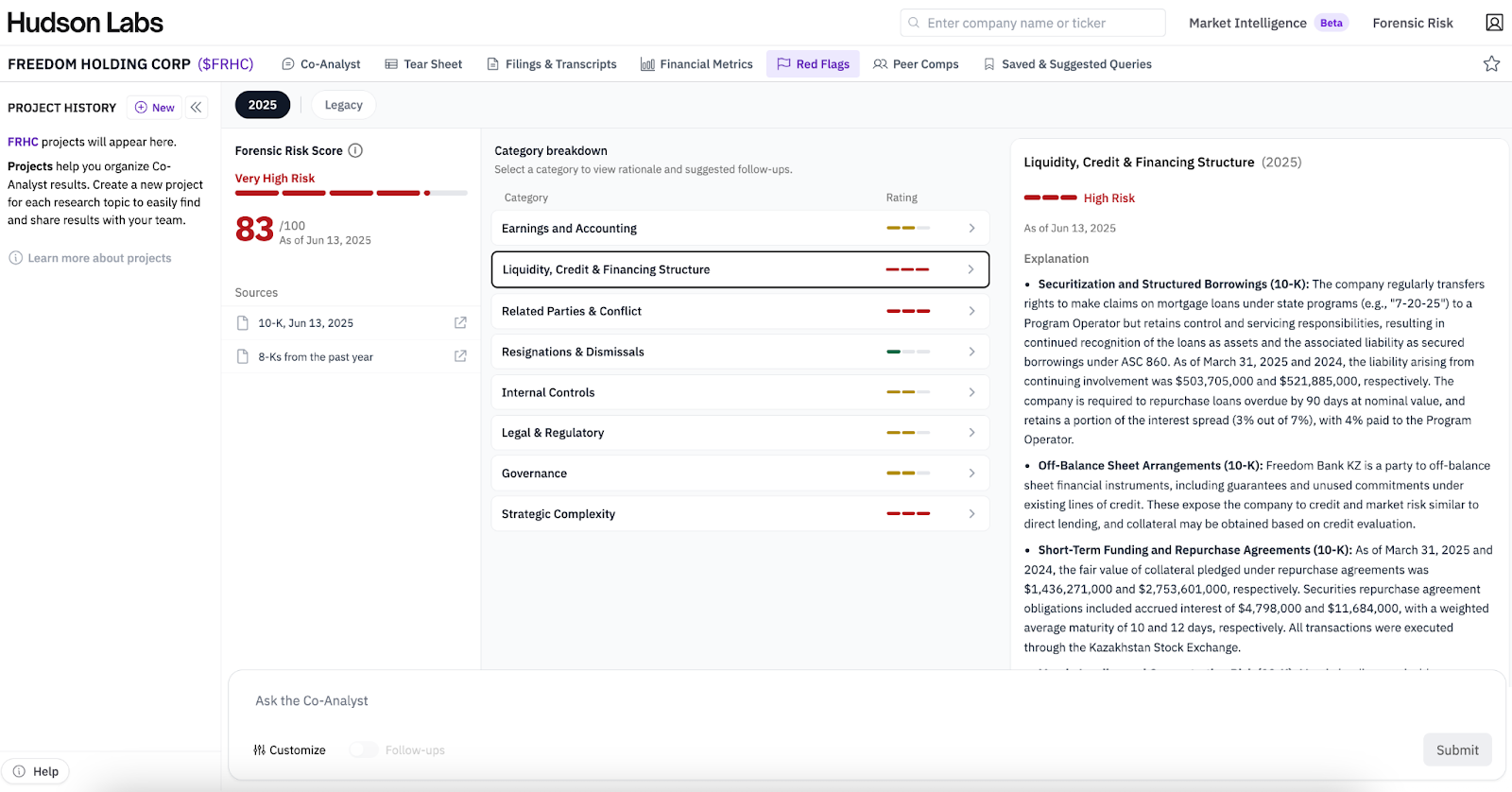
We love using our own platform to find interesting long and short ideas. Today, we wanted to highlight a recent short idea we discovered using our Market Intelligence feature, which was recently updated to include filtering on Hudson Labs forensic risk score and category risk ratings. We shared a shorter version of this note with our clients on March 11th, before the recent short seller report and subsequent price decline.
How we find interesting stocks
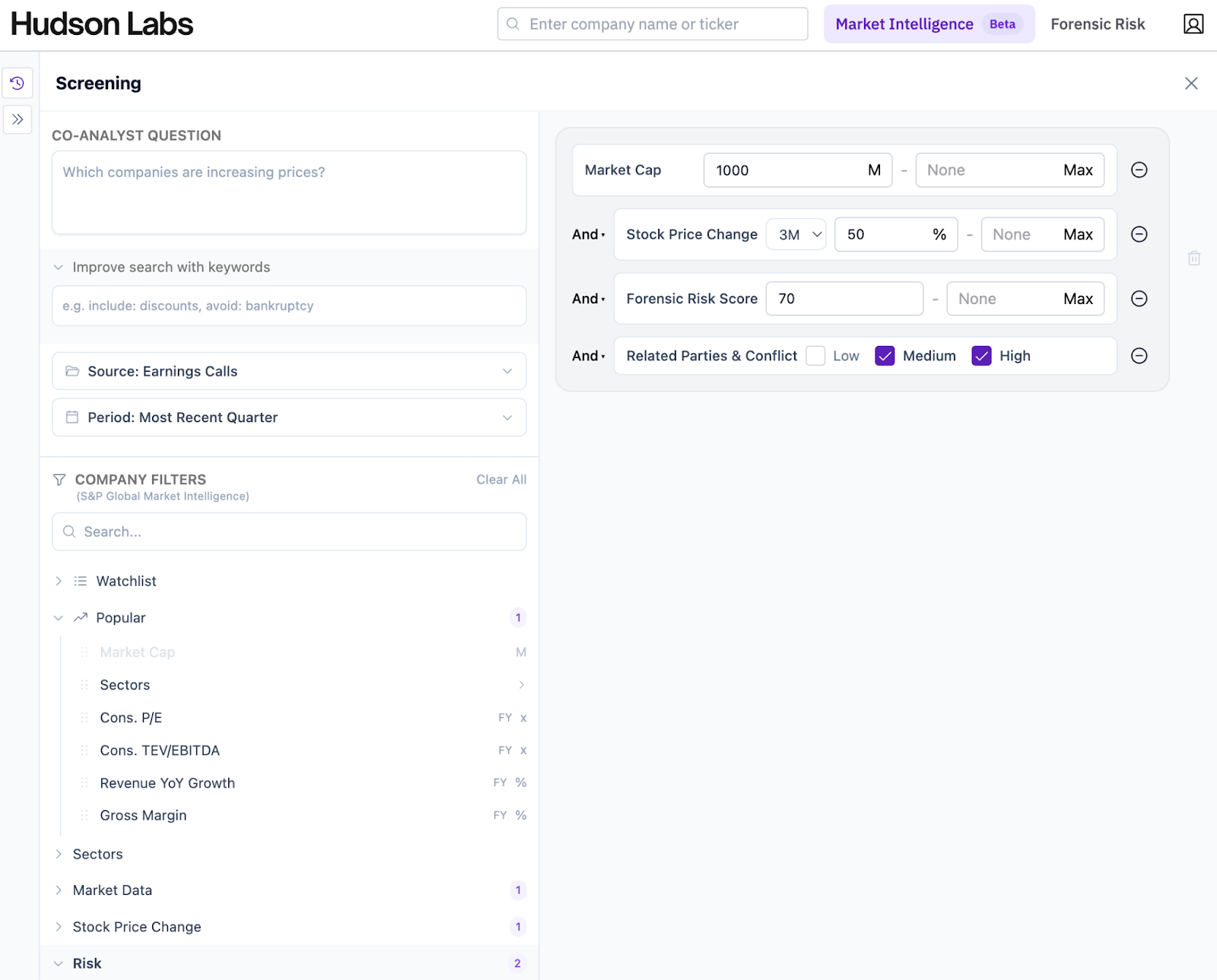
As we often do, we started by looking for companies using our Market Intelligence tool. We look for companies that are large and liquid ($1B+ market cap), with a recent runup in price (e.g. least 50% over the past 3 months), and a high forensic risk score (70+), often paired with a medium or high related parties or Liquidity risk rating.
One of the companies that we found through this screening was Babcock & Wilcox ($BW). The company had a significant increase in price on March 4th, when they announced an agreement with Base Electron, a subsidiary of Applied Digital, to design and construct a power plant to support Applied Digital’s AI data centers. The stock surged over 30% on the news.
We decided to investigate.
Red flags discovery
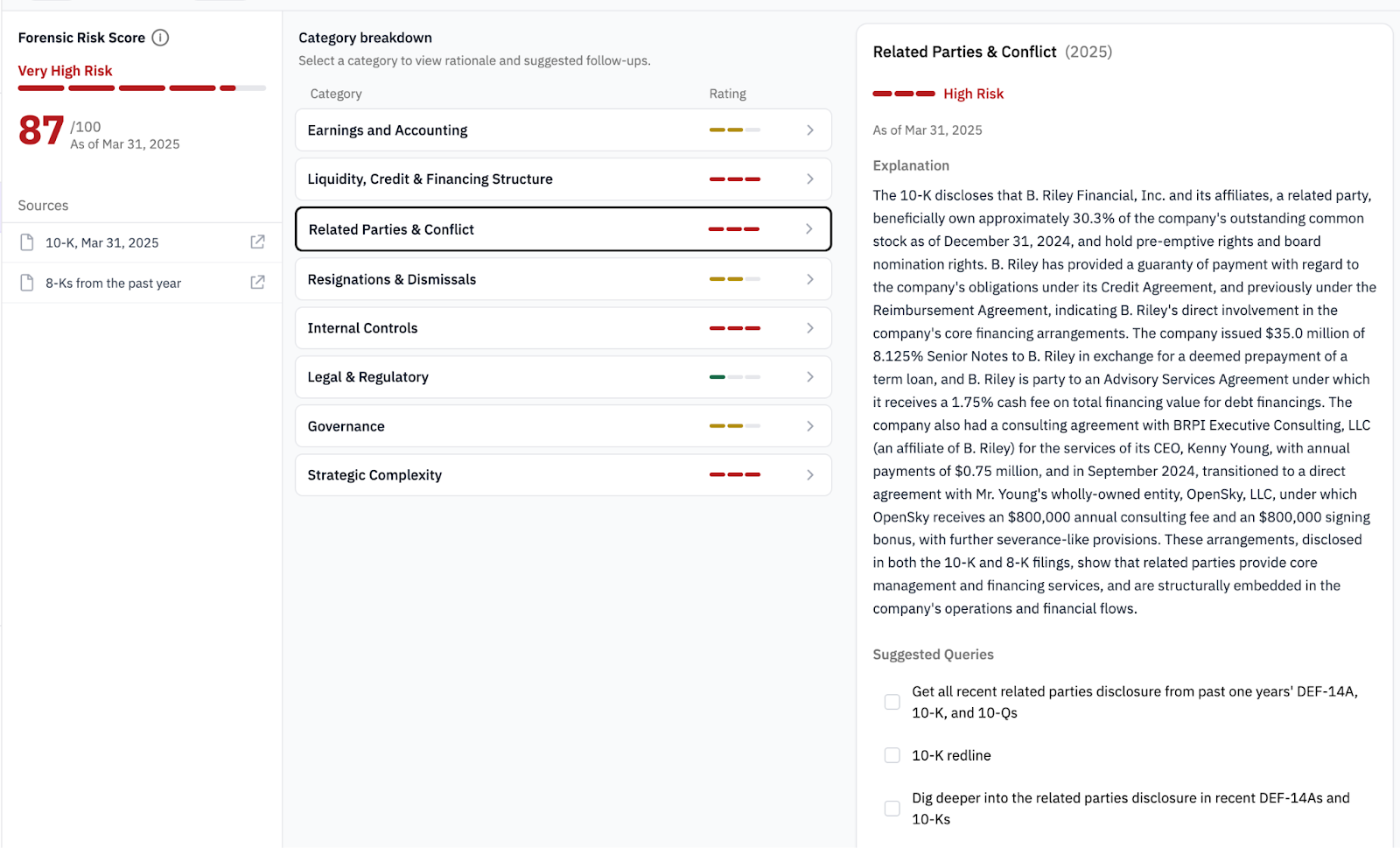
BW had a very high forensic risk score of 87 based on its March 31, 2025 10-K and our related parties risk description noted that:
- B. Riley Financial owned approximately 30.3% of BW at the time of that filing,
- B. Riley had guaranteed BW’s obligations
- BW issued $35M in senior notes to B. Riley
- B. Riley receives 1.75% advisory fee on the total value of B’s debt financing
- Previously, BW had a consulting agreement with BRPI Executive Consulting, LLC, through which they hired their CEO, Kenny Young. BRPI is also an affiliate of B. Riley
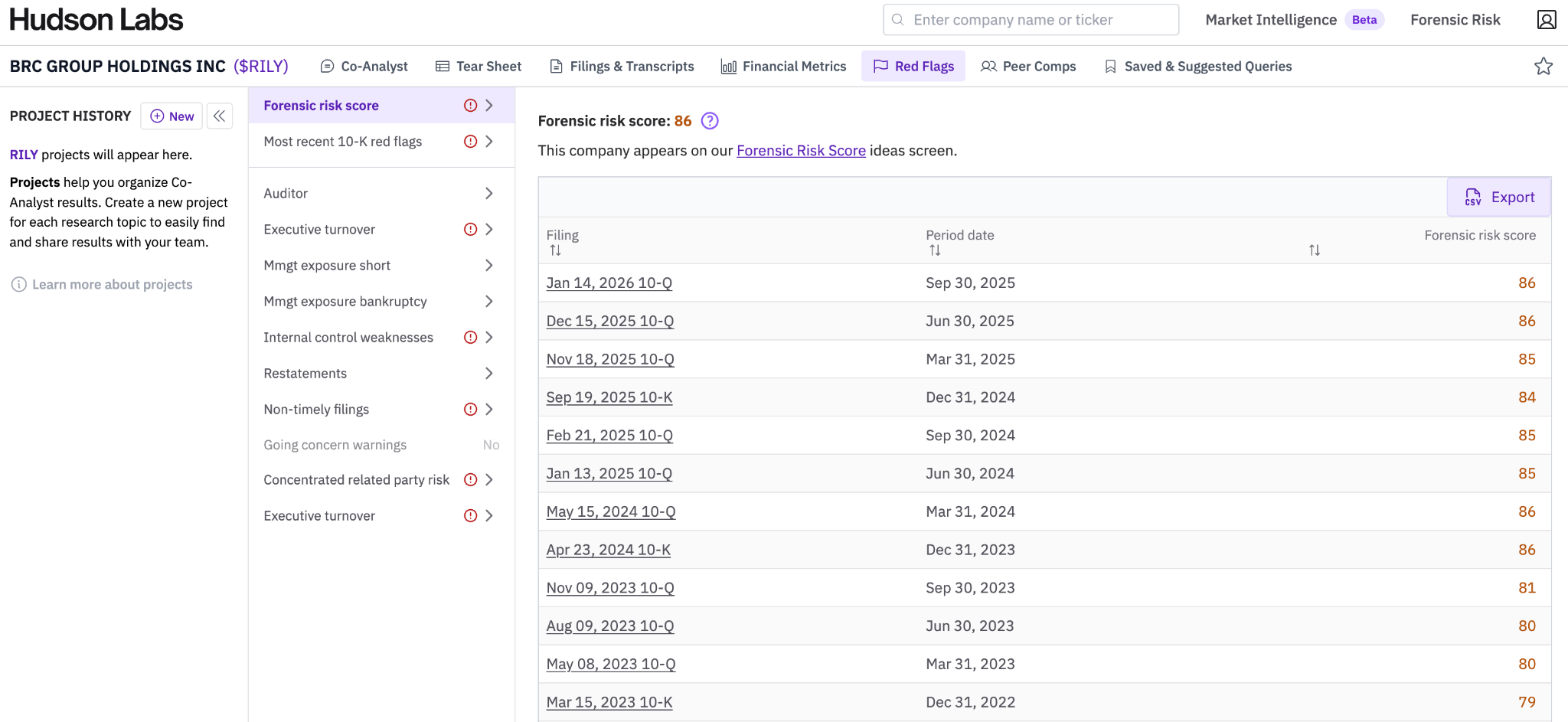
We knew from past experience that B.Riley has had a long history of high forensic risk scores, with ineffective internal controls, repeated late filings, and multiple related parties and conflicts of interest.
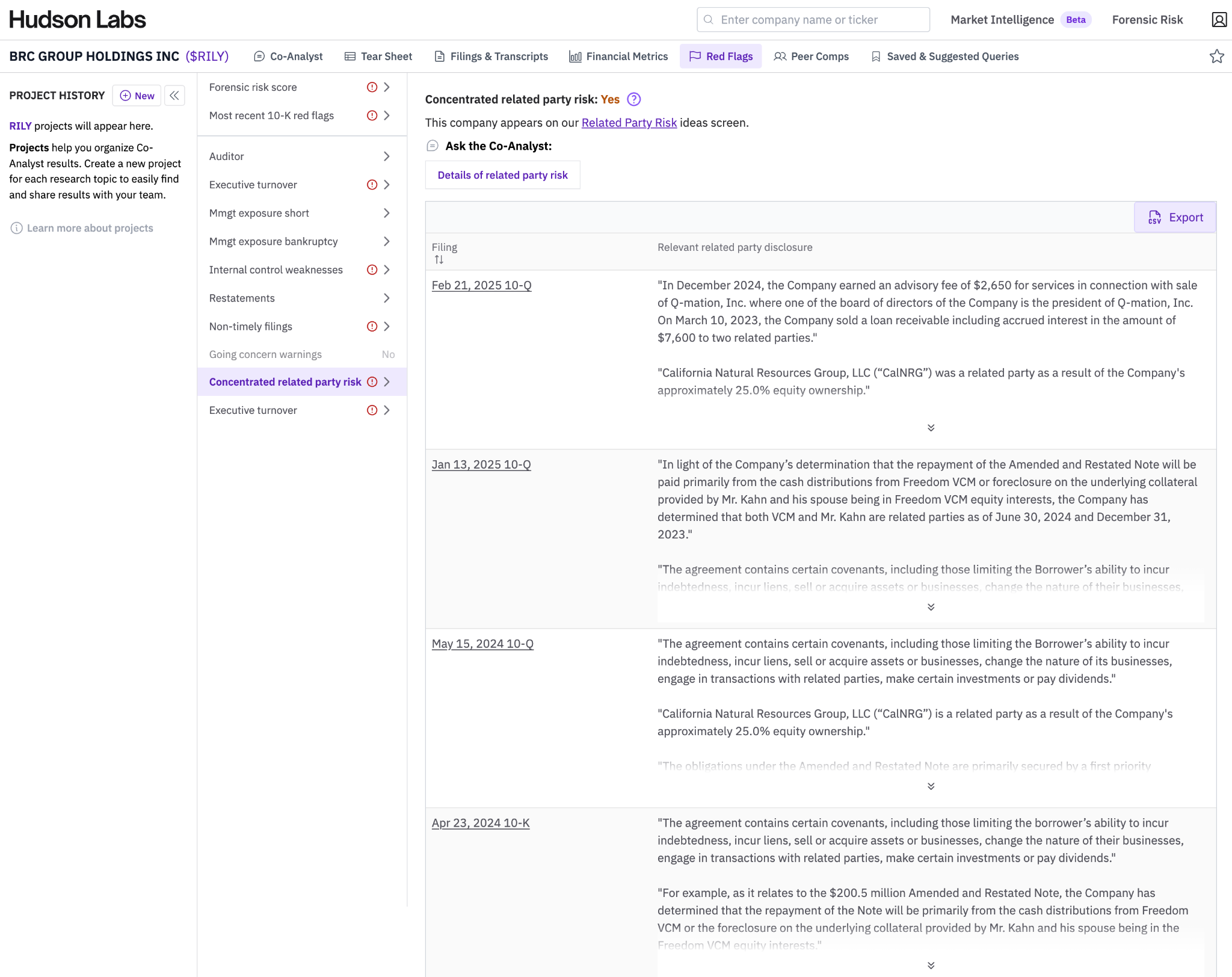
Red flags deep dive
Base Electron / APLD contract not an arm’s-length transaction
When we used the Co-Anayst to dive deeper into APLD’s recent filings and earnings releases, we found that in November 2025, APLD invested $2.0 million in Babcock & Wilcox.
It was clear now that BW and APLD were not transacting at arm’s length.
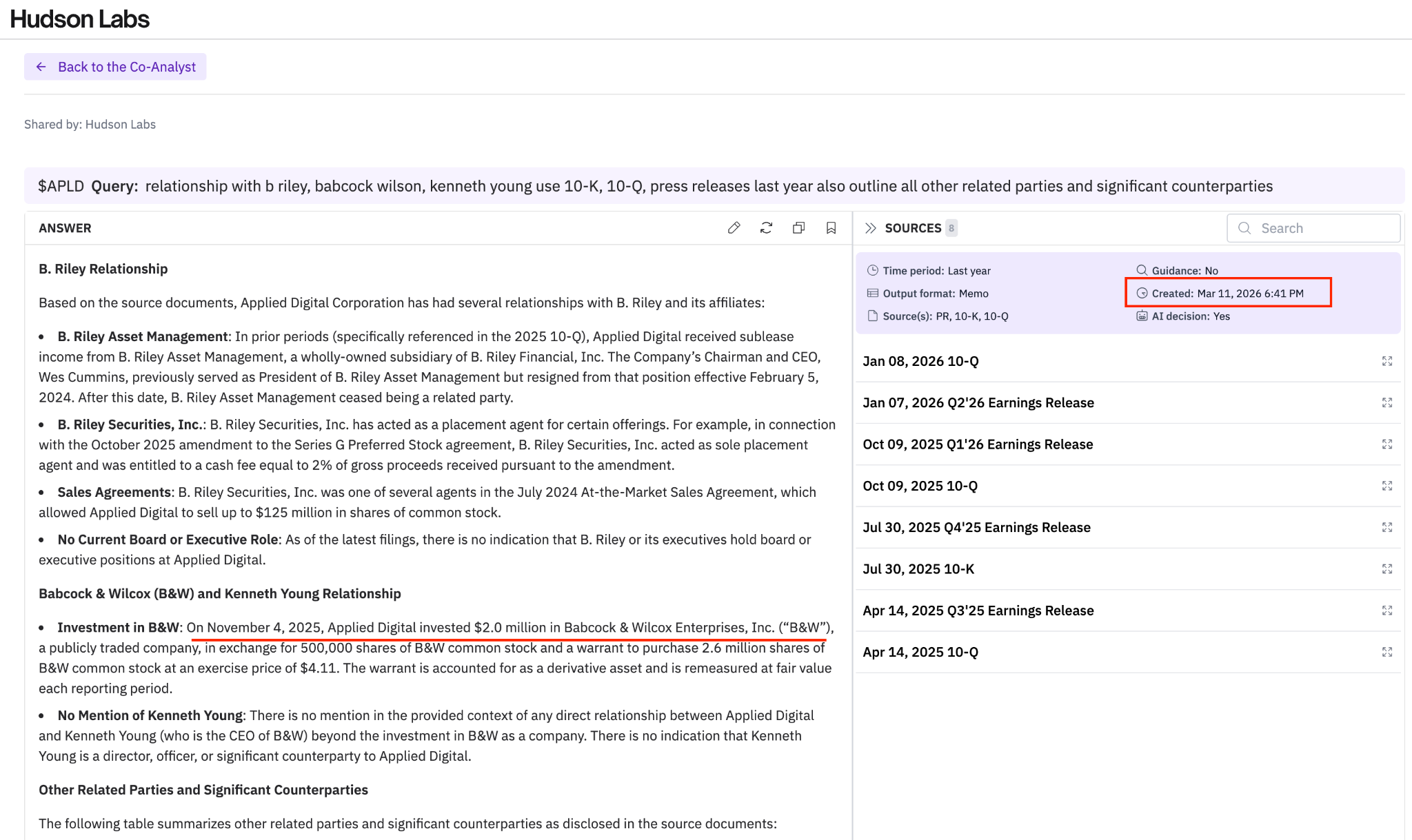
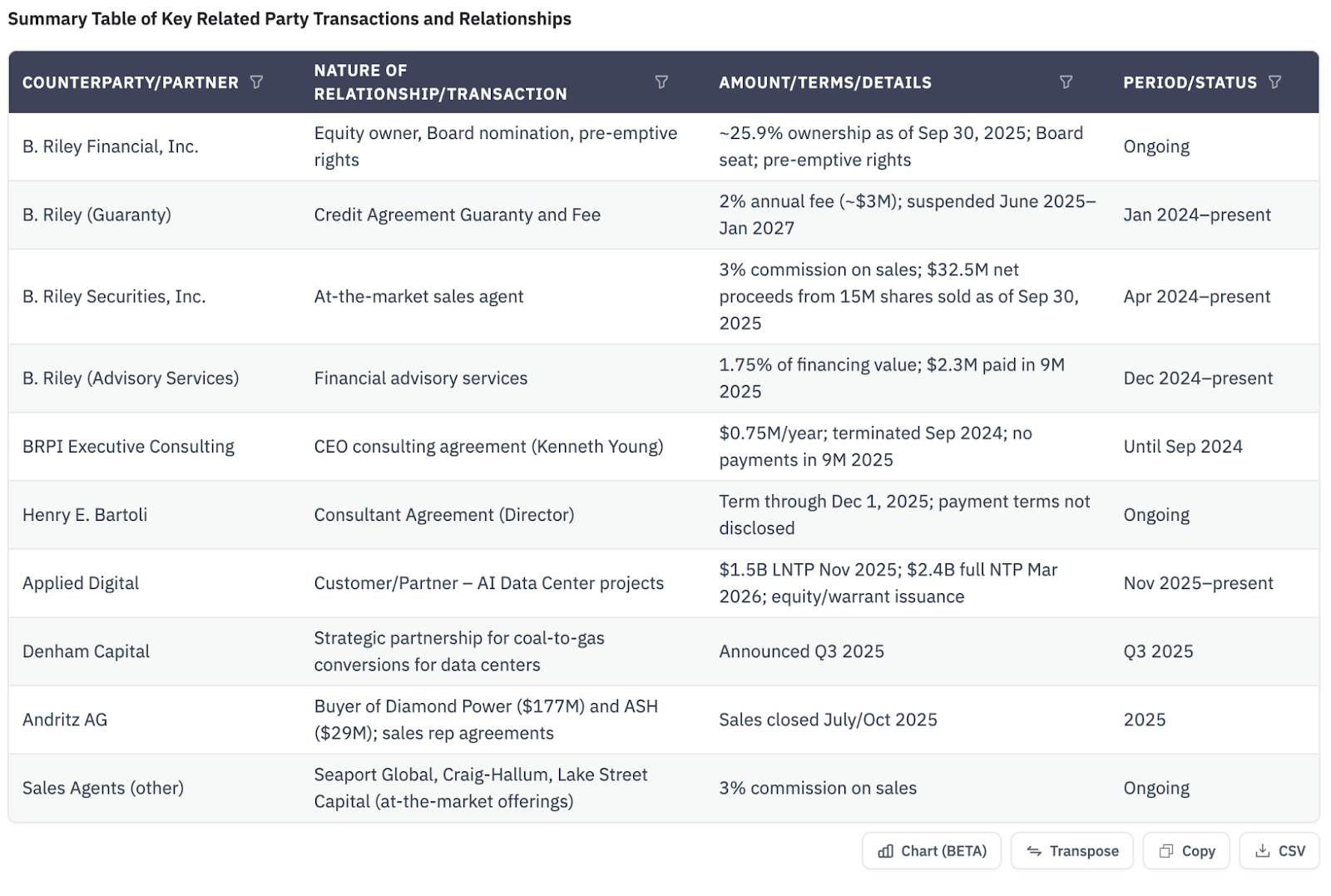
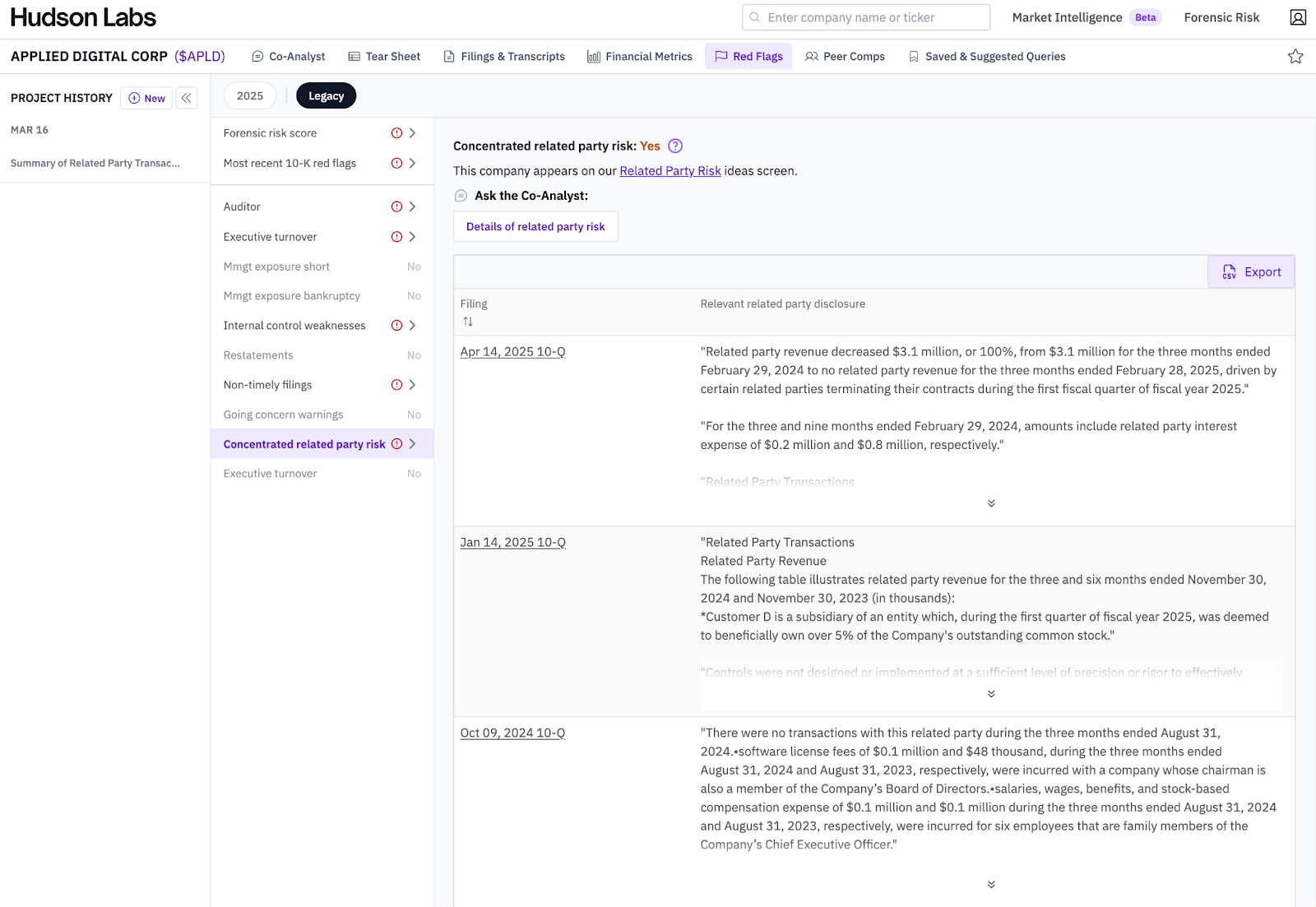
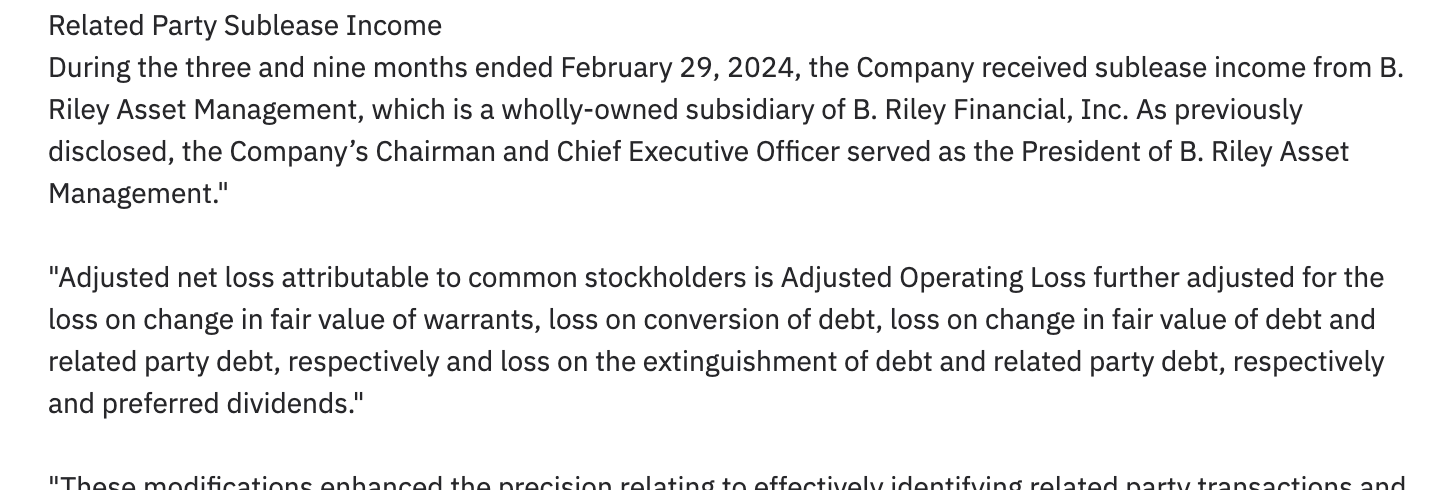
While APLD’s related party risk seemed moderate according to their 10-K from July 2025, B. Riley had been a related party of APLD until April 2025. APLD received sublease income from B. Riley Asset Management, which is a wholly owned subsidiary of B. Riley Financial, Inc. Also, APLD, Chairman and CEO, Wes Cummins, is the President of B. Riley Asset Management.
BW’s backlog was shrinking without the Base Electron contract
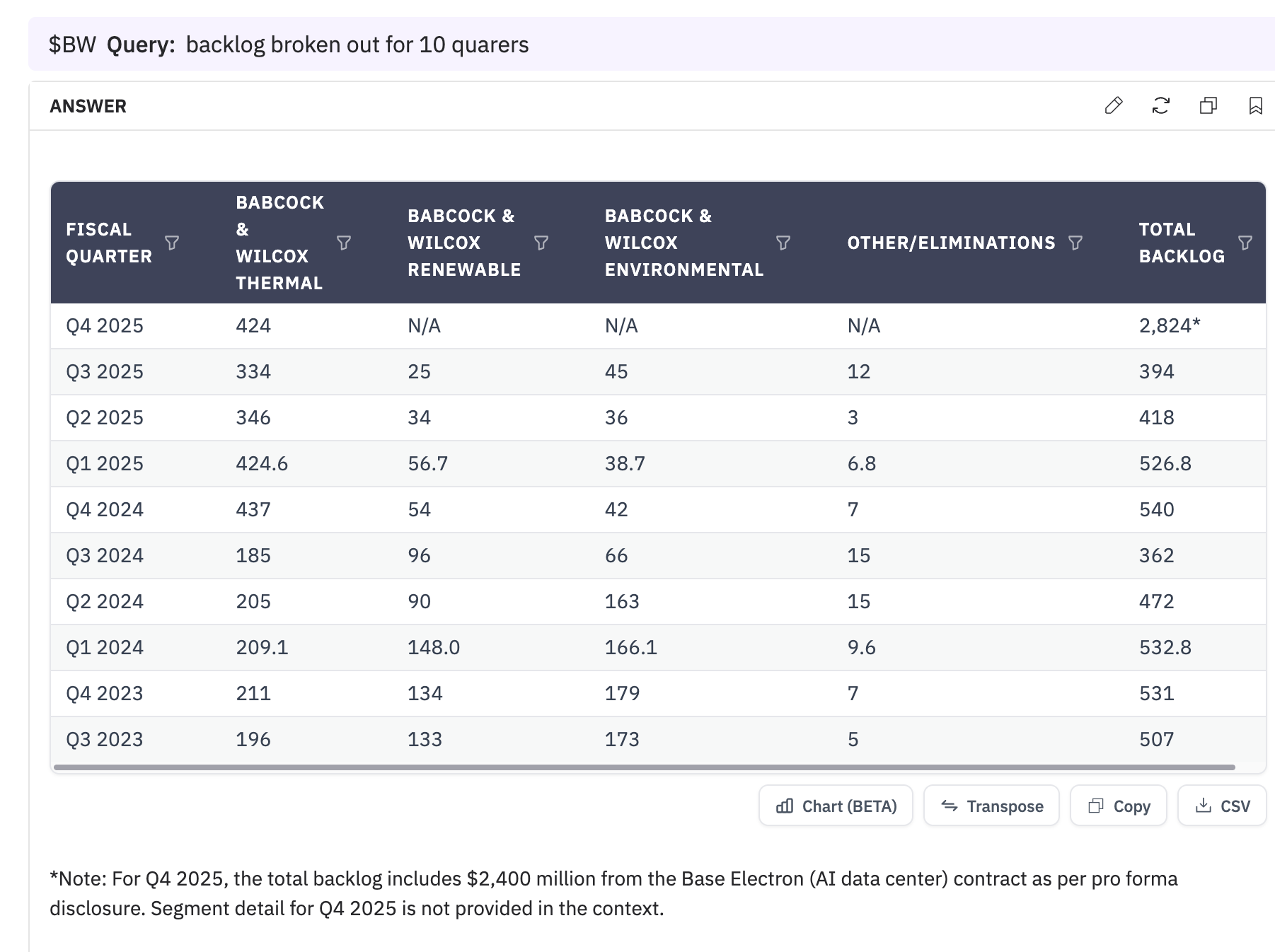
Strip out the Base Electron contract, BW’s backlog is down compared to prior year, a significant drop in the backlog growth compared to prior quarters.
Liquidity issues
The Base Electron contract also doesn’t start contributing significant revenue for BW until 2028. However, BW needs cash now.
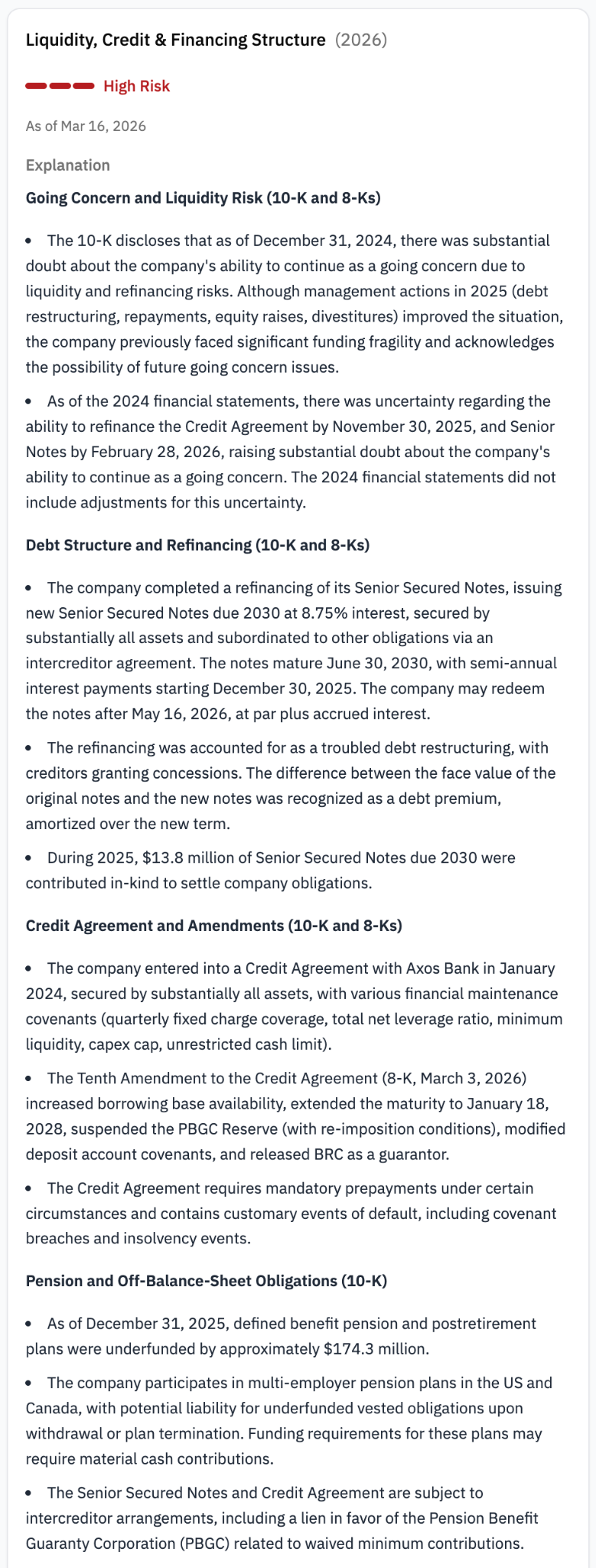
- As of last quarter, the company's business wasn't generating enough cash to survive the next 12 months (going concern warning).
- BW recently refinanced its debt owed to their closely related party, B. Riley Financial, and also negotiated an extended maturity on the Credit Agreement with Axos Bank.
- BW’s pension fund is still underfunded by $174 million.
Ineffective internal controls
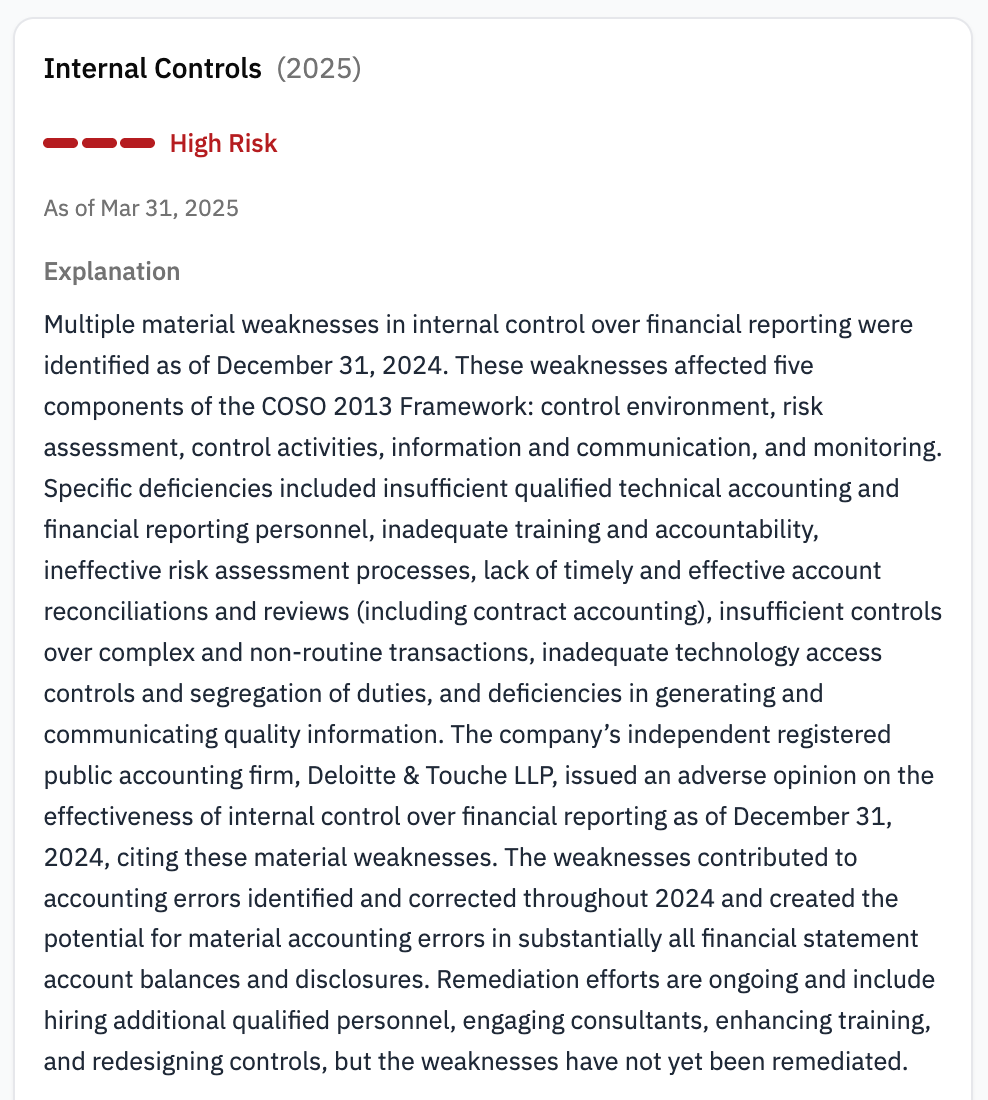
BW has identified multiple material weaknesses in internal control over financial reporting, with it’s 2025 auditor, Deloitte, issuing an adverse opinion and indicating that BW’s financial statements had multiple accounting errors.
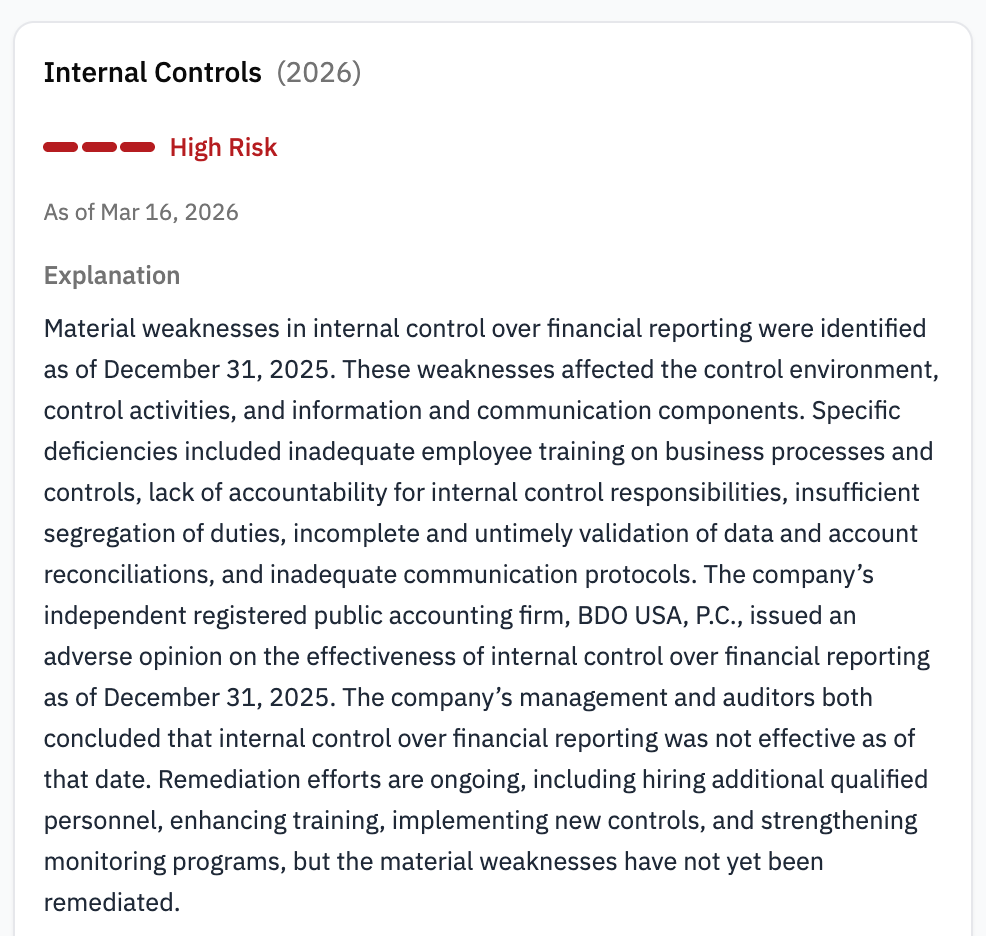
Not much has changed as of the 2026 10-K, except for a change in auditor. BDO reissued the adverse opinion on the effectiveness of internal controls. There are a number of reasons why a public company may choose to change its accounting firm, including cost or reputation concerns. However, changes in audit firms can also be caused by tension between the management team and the team reviewing their work. These changes are therefore often considered to be a red flag.
The adverse opinion from an auditor and an auditor change, both increase the likelihood of material future restatements to the company’s financial statements.
Other red flags
- Management turnover: BW’s General counsel left the firm in January 2026. Previous CFO left the firm in November 2024.
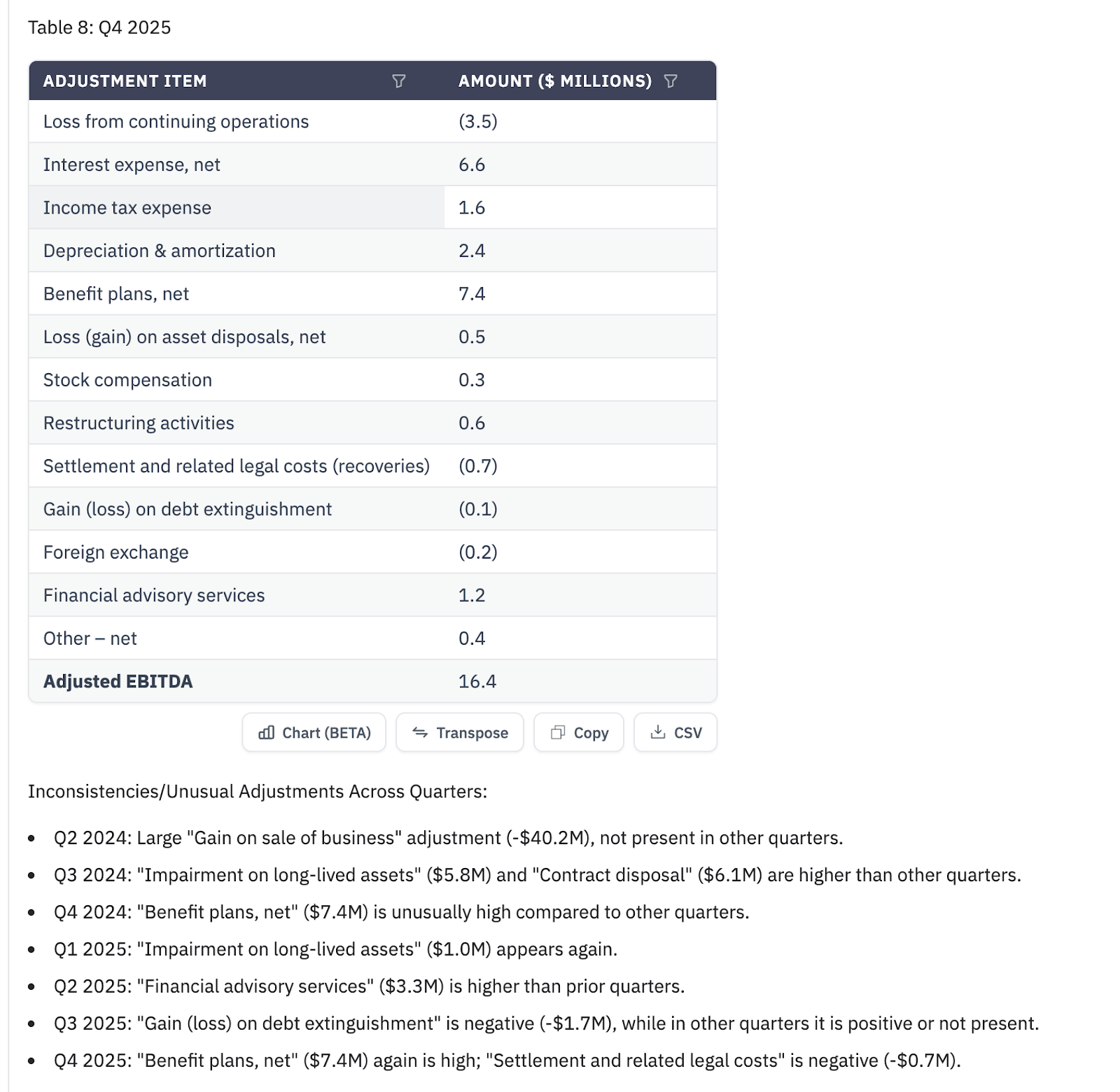
- Reliance on aggressive adjusted metrics. Many adjustments like benefit plans, financial advisory services are recurring. BW even added back "product development" to net income in Q1, 2025.
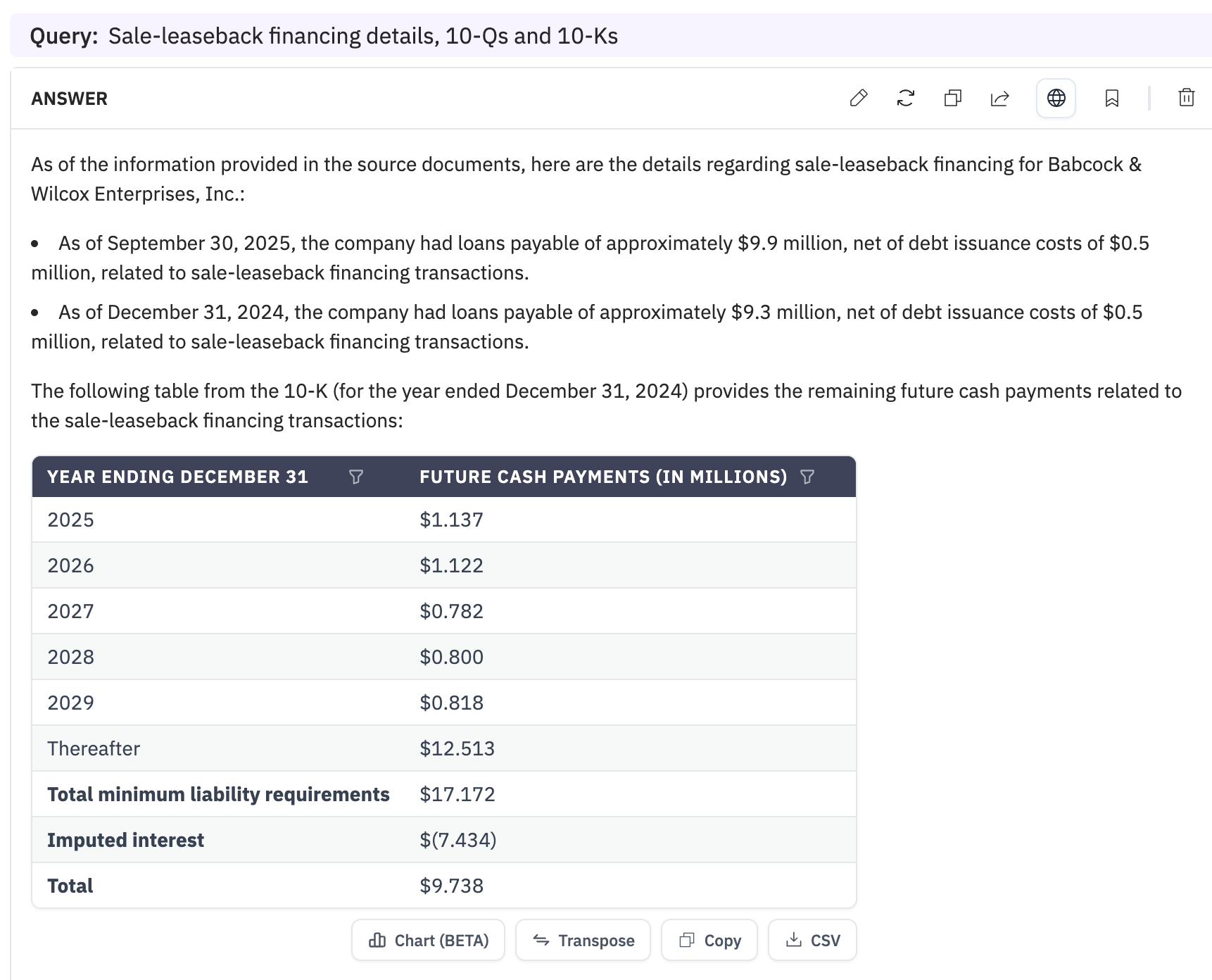
- Off balance-sheet risk: Although often framed as capital optimization, sale-leasebacks are economically akin to secured borrowing and can obscure true leverage by replacing owned assets with debt-like lease obligations. Their use to generate liquidity—especially in weaker companies—can signal constrained access to capital and declining financial flexibility
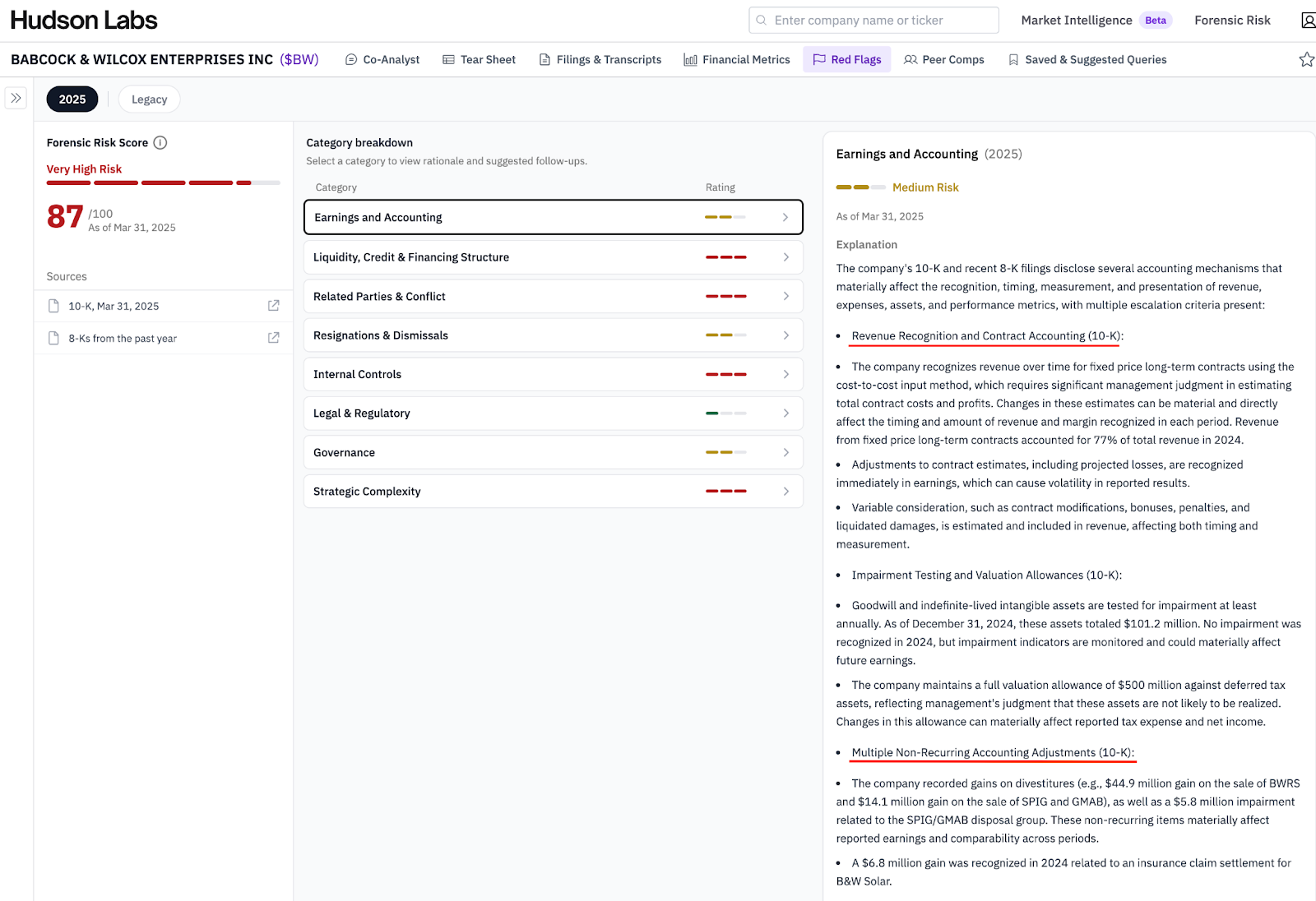
- Highly subjective revenue recognition. The company recognizes revenue over time for fixed price long-term contracts using the cost-to-cost input method, which requires significant management judgment in estimating total contract costs and profits.
Conclusion
BW looks like a classic case of stock appreciation driven more by narrative than fundamentals. Beneath the surface, the company faces deteriorating backlog trends, near-term liquidity constraints, and persistent internal control failures. At the same time, its capital structure and strategic direction appear increasingly influenced by B. Riley Financial, Inc., creating a non-arm’s-length environment with overlapping roles across ownership, financing, and advisory functions.
A day after we shared the note with our clients, Wolfpack Research also published a short report on Babcock & Wilcox, highlighting some of the same issues that we found through the Co-Analyst.
Want to find your own ideas using Market Intelligence and Co-Analyst? 👉 Book a demo today to get started.